

Introduction
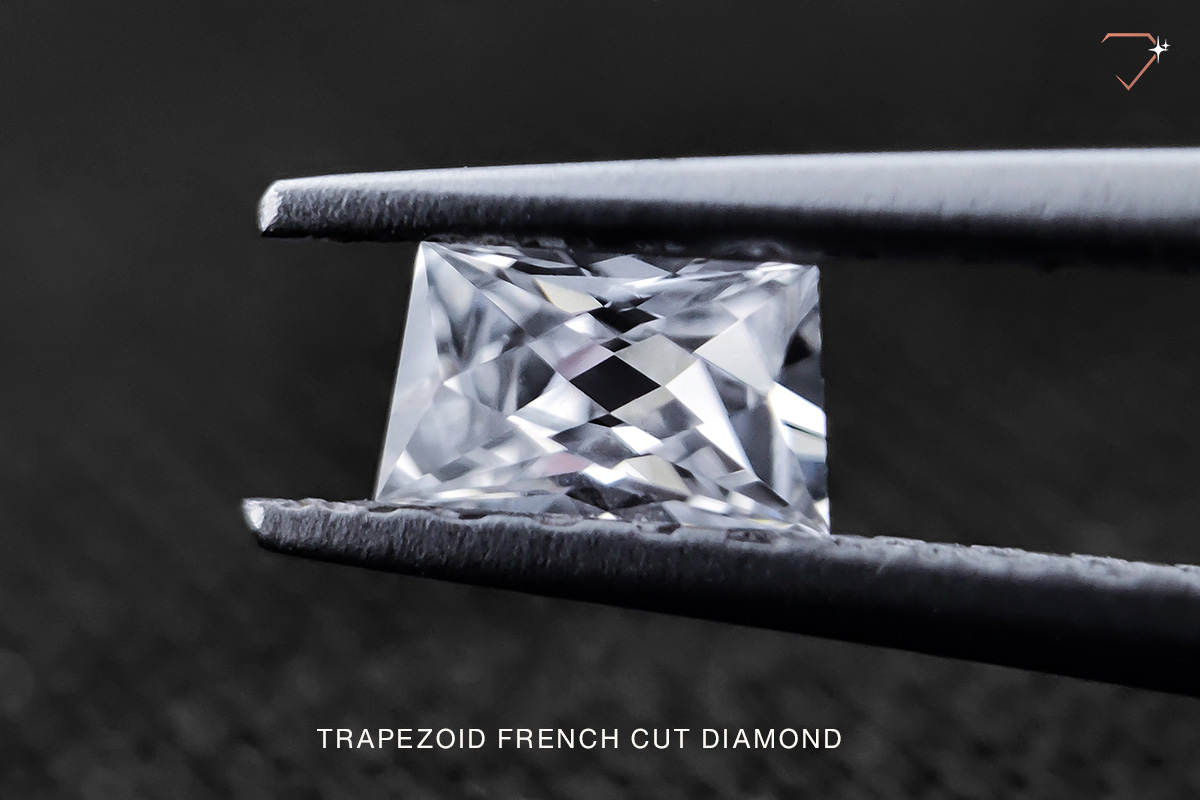
The French cut is one of the oldest and most architecturally pure diamond cuts in existence predating the modern brilliant by nearly two centuries. Characterised by a flat table, just 14 step facets, and a square or rectangular outline, the French cut offers a mirror-like serenity that brilliant cuts cannot replicate.
At Dharam Export India, we manufacture precision-calibrated French cut diamonds in two of the most sought-after shapes for fine jewellery: the elongated Baguette and the symmetrical Square. Both are hand-selected, RJC-certified, and available in custom calibrated sizes for jewellers worldwide.
What Is a French Cut Diamond?
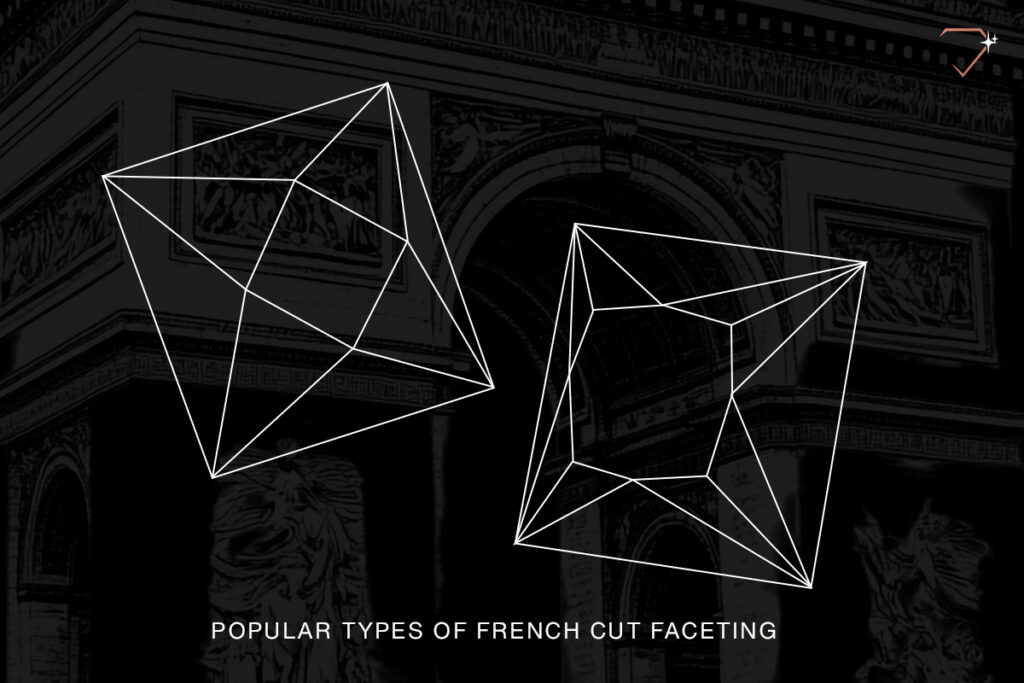
The French cut emerged in the 15th and 16th centuries and reached its pinnacle of popularity during the Art Deco movement of the 1920s and 30s. Unlike a brilliant cut, which uses 57 or 58 facets to scatter and reflect light in every direction, the French cut uses only 14 facets a large flat table, a series of step facets on the crown, and a very shallow pavilion
The result is a distinctive geometric brilliance: controlled, calm, and almost architectural. Light reflects in clean parallel planes rather than explosive sparkle, making French cut stones ideal for minimalist, Art Deco, and contemporary geometric jewellery designs.
Why jewellers love it
French cut diamonds sit completely flat in channel and pavé settings, eliminating unsightly gaps between stones. Their consistent calibration ensures line-perfect results in eternity bands, accent rows, and multi-stone cluster pieces.
Baguette French Cut: Elongated Precision
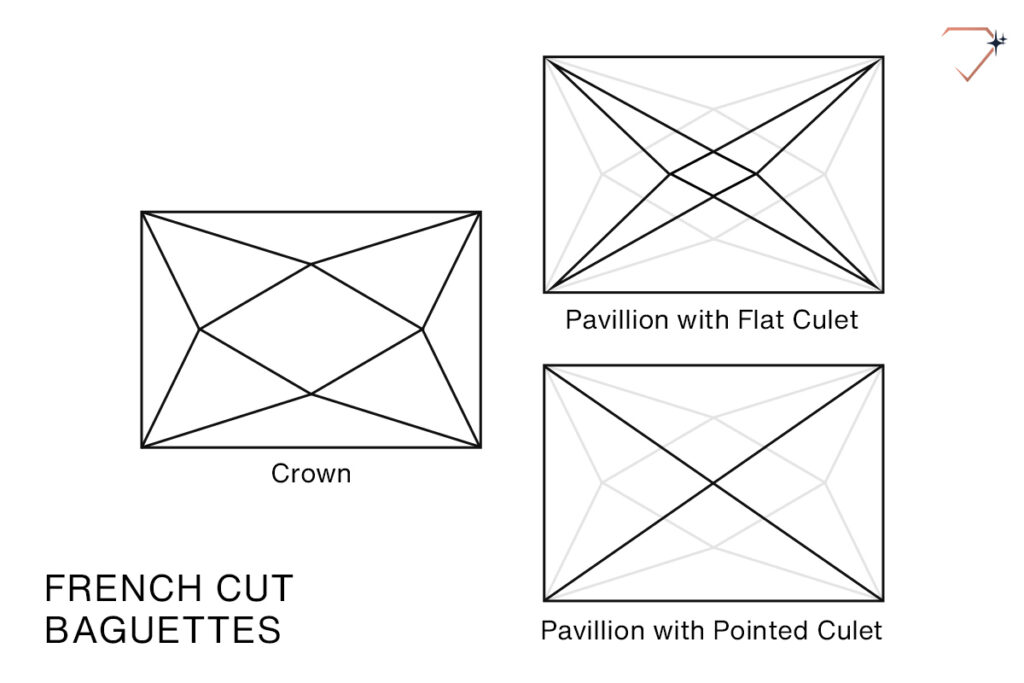
The French Baguette is the definitive stone of Art Deco channel settings. Its long rectangular outline, step facets, and carefully clipped corners make it the perfect accent stone for necklaces, bracelets, rings, and watches.
Why choose the French Baguette?
- Creates seamless, uninterrupted lines in channel and pavé settings
- Calibrated corners prevent snagging and seat flush against metal
- Available in ratios of 1:2, 1:2.5, and 1:3 to match your design proportions
- Pairs beautifully with round brilliants as accent stones in contrast settings
- Popular in eternity bands, tennis bracelets, and statement rings
Dharam Export Baguette specifications
- Shape: Elongated rectangle with mitered corners
- Facets: 14 (French step)
- Calibrated sizes: 1×2 mm to 3×5 mm
- Ratios: 1:2 | 1:2.5 | 1:3
- Colour: D-F (colourless), G-H (near-colourless)
- Clarity: VVS1-VS2 (premium), SI1-SI2 (commercial)
- Setting use: Channel, pavé, eternity, accent
Square French Cut: Geometric Symmetry
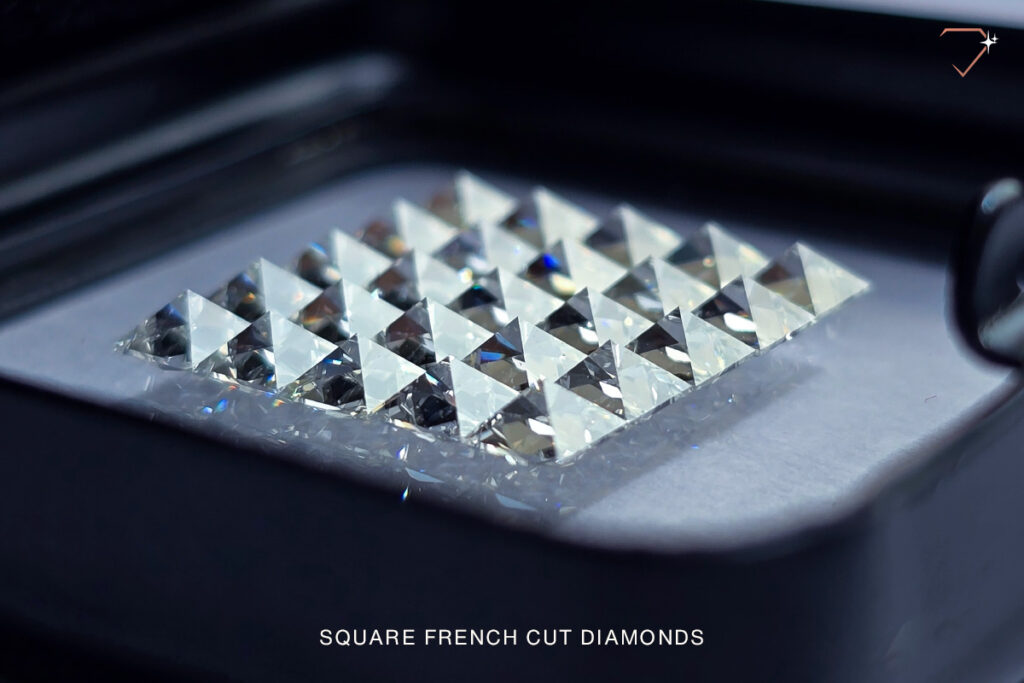
Where the Baguette elongates, the French Square equalises. Its perfect 1:1 ratio and concentrically stepped facets create a bold, graphic presence at once vintage and completely contemporary.
Why choose the French Square?
- Ideal for geometric pavé patterns and architectural cluster designs
- Works exceptionally well in flush and tension settings due to flat its base
- Consistent 1:1 ratio ensures perfect tiling in multi-stone grids
- Evokes strong Art Deco and mid-century modern aesthetics
- Increasingly popular in men’s jewellery and watch bezels
Dharam Export Square specifications
- Shape: Perfect square (1:1 ratio)
- Facets: 14 (French step)
- Calibrated sizes: 1×1 mm to 4×4 mm
- Ratio: 1:1 (precise)
- Colour: D-F (colourless), G-H (near-colourless)
- Clarity: VVS1-VS2 (premium), SI1-SI2 (commercial)
- Setting use: Flush, tension, geometric pavé, bezel
Setting Applications & Design Pairing
French cut stones both Baguette and Square are remarkably versatile in their setting applications. Below are the most common uses our clients source these cuts for:
Channel & eternity bands
The flat base and consistent calibration of French cuts make them the first choice for channel settings in eternity rings and bracelets. The stones sit level with no light leakage between them, a hallmark of premium manufacture.
Geometric pavé & cluster designs
French Squares tile perfectly in grid-style pavé clusters. Used in contemporary engagement rings and statement pendants, they create a bold mosaic effect that no other cut replicates.
Accent stones alongside brilliants
French Baguettes are the classic choice for flanking a round solitaire in three-stone rings. The controlled flat brilliance of the Baguette creates a striking contrast against the sparkle of a round brilliant centre stone.
Watch bezels & men’s jewellery
The square and baguette French cuts are increasingly appearing in premium watch bezels and men’s rings, where their architectural character fits the bold, structured aesthetic of masculine fine jewellery.
Caring for French Cut Diamond Jewellery
French cut stones require the same general care as any fine diamond, but their flat table and step facets do benefit from a few additional considerations:
- Clean regularly with a mild soap and warm water solution using a soft brush
- Avoid ultrasonic cleaners for very small calibrated pieces set in channel settings vibration can loosen stones
- The flat table surface shows fingerprints more readily than brilliant cuts a gentle wipe with a lint-free cloth maintains the mirror finish
- Inspect channel settings every 6-2 months to ensure prongs or edges are secure
Conclusion
French cut diamonds whether in the elongated Baguette or the perfectly square format bring a level of geometric elegance and historical character that no other cut replicates. Their flat-table brilliance, precise calibration, and architectural versatility make them an enduring choice for jewellers working in Art Deco revival, minimalist contemporary, and vintage-inspired design.
At Dharam Export India, we combine centuries-old cutting heritage with modern calibration precision to deliver French cut diamonds that meet the exacting standards of jewellers on every continent. Whether you need a single matched pair or a full production parcel, our team is ready to assist.
Frequently Asked Questions
What is the difference between a French cut and an emerald cut?
Both are step cuts, but an emerald cut uses 57-58 facets and has a deeper pavilion with characteristic ‘hall of mirrors’ reflections. A French cut uses only 14 facets and has a very flat, wide table producing a more graphic, architectural light return and a cleaner, bolder geometric identity.
Are French cut diamonds less brilliant than round brilliants?
They reflect light differently, not less. Where a brilliant scatters light into fire and scintillation, a French cut returns light in flat, parallel planes – like light glancing off still water. It is a different kind of beauty, and one that many fine jewellers and collectors prize precisely for its understatement.
Can you supply matched pairs or sets of French cuts?
Yes. We sort and match French cut stones by colour grade, clarity grade, dimensions, and depth. Matched pairs for earrings and parcel lots for eternity bands are regularly produced to our clients’ exact specifications.
What is the minimum order quantity?
We accommodate enquiries from single stones for bespoke jewellery projects up to bulk wholesale parcels. Contact us at staging.dharamexport.com/contact to discuss your specific requirements.